
Live on iOS and Android
The workout log that becomes fitness's intent layer.
Log any workout and see the history. Use your own routine, a coach's program or decide at the gym. Trainer Studio can connect later.
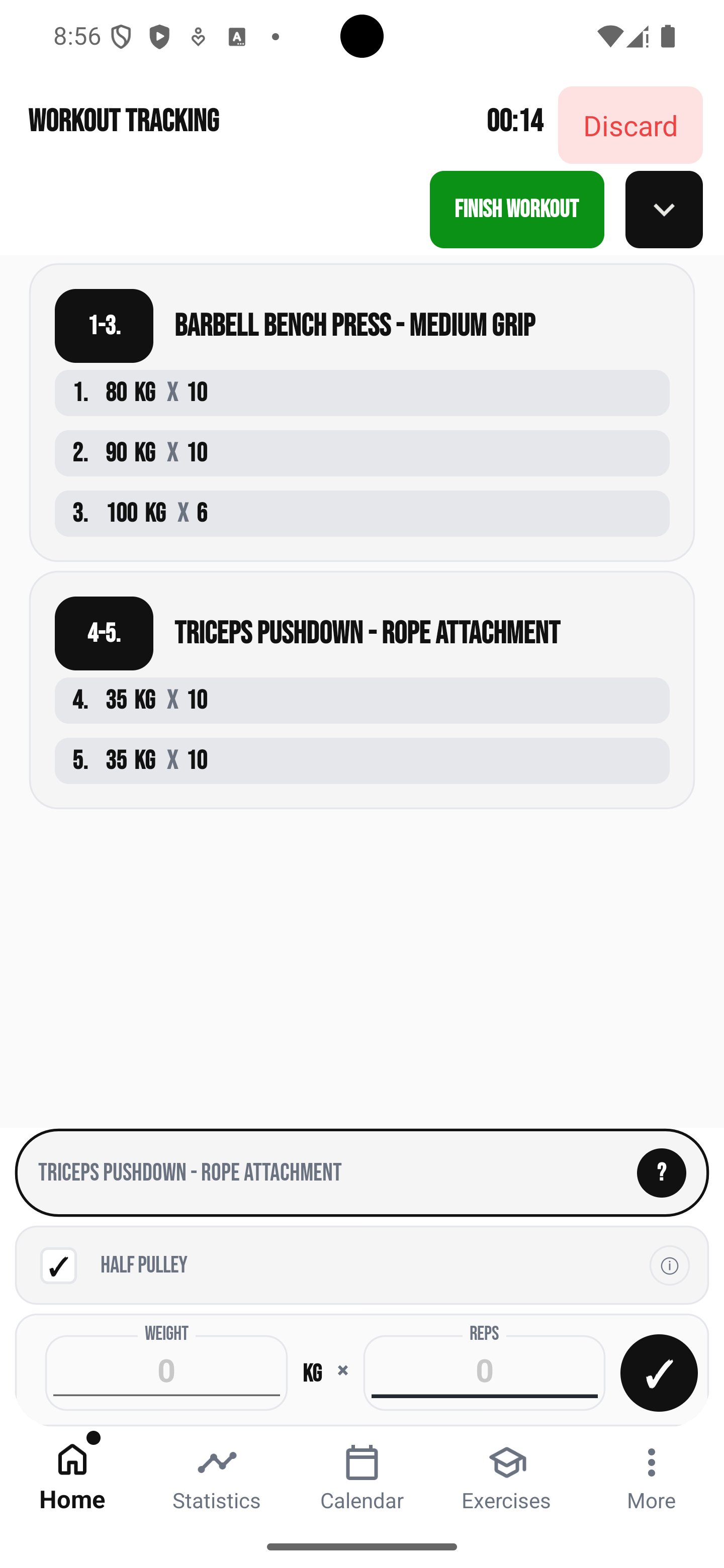
SET COMPLETE 100 × 6
The wedge / workout log first
At the machine, one question comes up often.
“What weight did I use last time?”
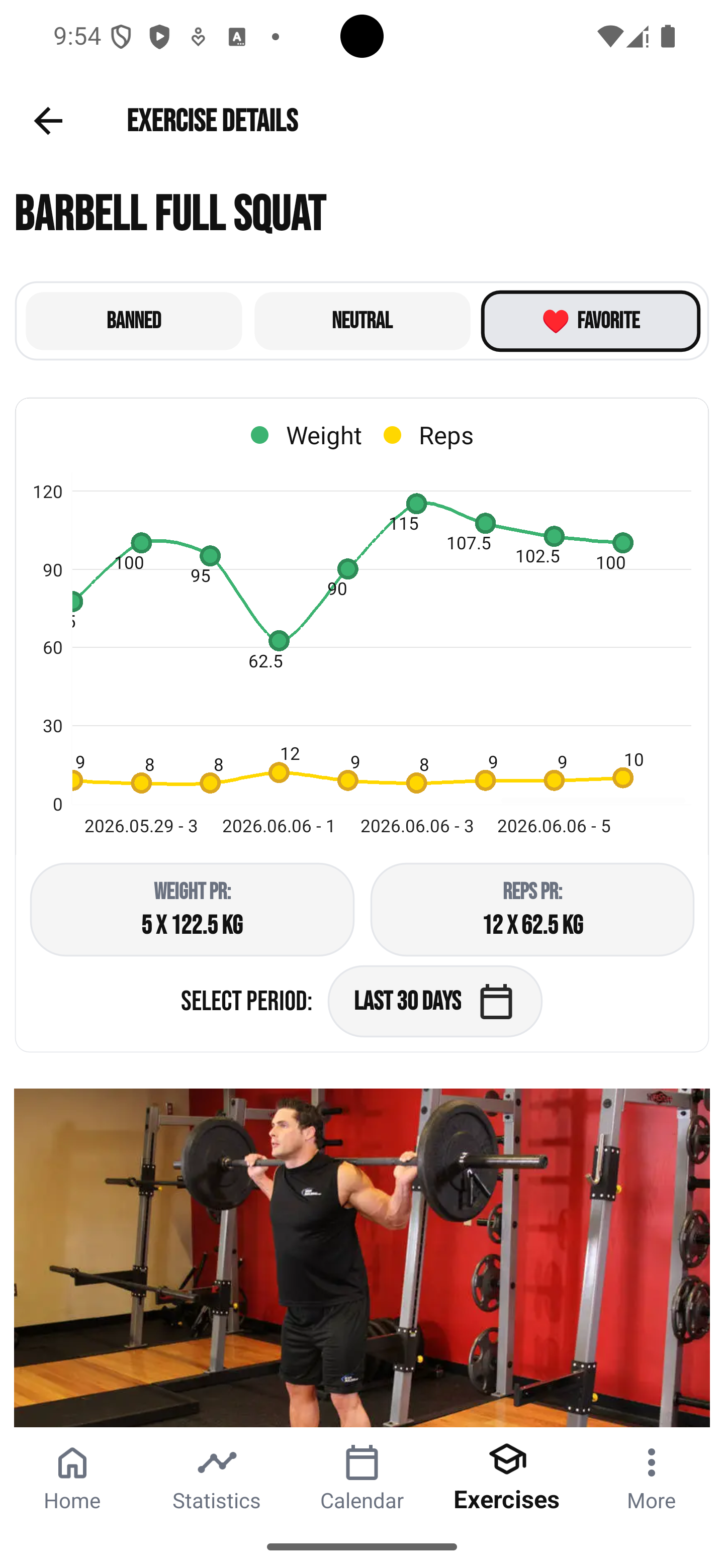
GymGo opens the exercise history next to the set logger. The previous weight, reps and trend stay within reach.
- 01 Fast set logging with recent performance in context
- 02 Exercise history, PRs and estimated 1RM
- 03 Offline-first flow built for the gym floor
The core loop
Log. Understand. Improve.
Athletes choose the workout. GymGo records each set and turns the history into statistics and progress signals.
01 / LOG
Keep momentum inside the workout.
Large targets, instant confirmation and the last useful data point.02 / UNDERSTAND
Turn sessions into readable feedback.
Volume and muscle distribution turn sessions into readable feedback.03 / IMPROVE
Show where progress is heading.
Strength trends connect today’s set with a reason to return.Flexible by design
Use the routine that works for you.
Some athletes follow a program. Some work with a coach. Others decide at the gym. GymGo logs each workout the same way.
Built from trainer interviews
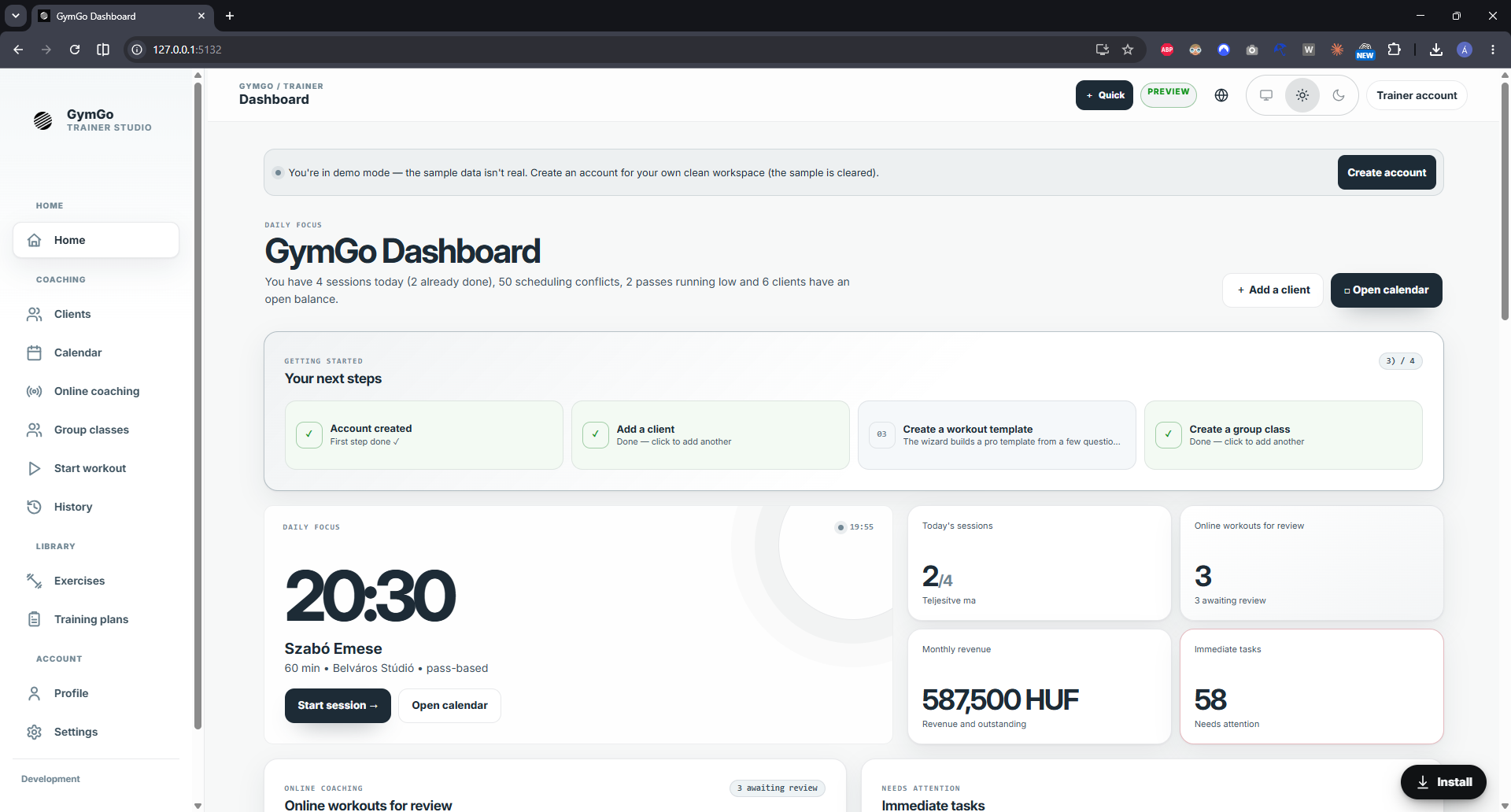
The trainer workflow, in one place.
The trainers we interviewed build plans in Canva, export them as PDFs and use separate booking apps for group sessions.
Current workflow
Several tools for one client journey
Canvaplan design
+
PDFclient delivery
+
Booking apptop tier for groups
Some coaches buy the largest booking tier for group sessions and leave most of its other features unused. GymGo Trainer puts these daily tasks in one workflow and keeps the coach's method intact.
When a client connects
The history comes with them.
The athlete can share their GymGo history with a trainer. Past sessions, PRs and progress are available from day one.
With permission
The trainer receives useful context before the first session.
The athlete controls the connection.
Athlete history
Sessions · PRs · Statistics
Coaching context
Clients · Programs · Reviews
Shared view
History from day one
With permission
Competition
Athletes, trainers and brands already have tools.
The gaps appear when workout data moves between them. GymGo gives each participant a useful view of the same activity.
Workout logging
Pen & paper · Notes · Hevy · Strong
Paper is immediate, flexible and free. Digital trackers add searchable history and analytics.
GymGoEvery set becomes searchable history.
Coach operations
Canva + PDF · Booking apps · Spreadsheets · Trainerize
Coaches often combine plan design, document delivery, scheduling and payments across separate products.
GymGoTrainer Studio receives the athlete's existing history after they connect.
Fitness network
Meta · Google · MyFitnessPal Media Network
Trainers bring clients. Client activity creates context. The ad layer turns relevance into revenue that can strengthen the network.
Trainers+Clients+Ad layer
JIT goalShow a useful product at the moment it becomes relevant.
GymGo performs the match internally. Advertisers receive campaign totals and conversion reports. Personal workout history stays in GymGo.
The business / intent layer
A completed set adds context.
GymGo can use that context to time a useful recommendation. The aim is a suggestion that arrives when it helps.
Observe the context
Exercise, load, reps and progress create a first-party signal.
Choose a relevant moment
Recovery, equipment or nutrition offers belong near the moment of need.
Track the result
Delivery and measurement are live. The next test adds contextual matching.
Current statusDelivery + measurement live in productContextual matching remains the next product test.
How the business develops
The product grows from the workout log.
The app creates a useful daily habit. Trainer subscriptions add recurring revenue. Retained use creates the basis for contextual commerce.
Free workout log
- 22 monthly active users
- Live on iOS and Android
- Offline-first, 8-language logging
Trainer SaaS
- Clients, calendar and live sessions
- Workout review and business operations
- Shaped by four trainer interviews
Intent commerce
- Delivery and measurement shipped
- Contextual matching is next
- Relevance must preserve user trust
Early evidence
Small numbers. Measured learning.
These are the product, acquisition and partner signals we have measured so far.
113 active installs · 110 Android · 3 iPhone
297 installs · paid acquisition test
active-user threshold named for launching partner campaigns
Named by a fitness brand general manager in discovery.verbal interest in distributing GymGo inventory to fitness clients
Partner interview result.Bottom-up revenue model
Two revenue engines.
Built one customer at a time.
Instead of applying a percentage to a global market, this model starts with customers we can charge and purchases we can attribute.
Illustrative base case · not a forecast
Independent growth paths
Most GymGo users may never work with a trainer. Trainer subscriptions and consumer commerce are modeled separately; no user-to-trainer ratio is assumed.
Each paying coach adds recurring revenue.
$49per month
× 12
$588ARR / coach
A flat monthly subscription replaces several separate tools. The $49 price is a planning assumption, not a launched price.
Paying coaches100$58.8K ARR
Paying coaches1,000$588K ARR
Paying coaches10,000$5.88M ARR
Each attributable purchase adds commission revenue.
25%buyers
×
$1,000annual wallet
×
10%attributed
×
20%commission
$5revenue / MAU / yr
The base case counts only a small, attributable share of user spend. Brands pay when a purchase happens, not for impressions.
Active users10K$50K / year$250K attributed GMV
Active users100K$500K / year$2.5M attributed GMV
Active users1M$5M / year$25M attributed GMV
Application inputs: a committed fitness user spends roughly $1,000 per year; GymGo targets a 20% commission on attributable purchases.
Illustrative assumptions: $49 monthly trainer pricing, 25% buyer participation and 10% of a buyer's annual fitness wallet attributed to GymGo.
Evidence boundary: the 10K threshold is a discovery signal, not a signed campaign. Meta-driven webshop sales are excluded from app revenue.
Built by operators
Two founders. Sixteen years of trust.
We have known each other since secondary school and build across product, engineering, operations and sales.

Co-founder / CEO
Ádám Faller
Product, growth, sales and operations. Mechanical engineer with published CFD–DEM research; previously built an industrial energy-efficiency business and runs YUDO’s Hungary operation.

Co-founder / CTO
Imre Szücs
Architecture and engineering across the offline-first mobile app, backend sync and trainer platform. Owns the technical systems that make the product feel immediate on the gym floor.
GymGo / Budapest / 2026